
The Top-Rated Night Creams of 2026

Jenny Hayber
Jenny HayberHealth Editor

Jenny has been a practicing esthetician in the NY metro area for over 20 years. She has extensive knowledge of skincare health, which is matched by her deep passion for beauty products.

This website is owned and operated by Hi-Altitude Brands. Hi-Altitude Brands may receive compensation from companies featured when you purchase through provided links.

How We Found The Best Night Creams

One of the most popular products in the anti-aging skincare category today are night creams. The goal of these specialized creams is to help accelerate your skin's natural ability to renew itself and ward off unsightly fine lines, wrinkles, and skin discoloration, ultimately revealing plumper, more radiant-looking skin.

The demand for night creams comes not only from baby boomers but women beginning in their 30's. Many consumers are starting to understand better how sun damage, air pollution, stress, and lack of sleep can result in fine lines, crow’s feet, loss of elasticity, and uneven skin tone.

The popularity of night creams has led to hundreds of different formulas flooding the marketplace. While these products all promise to deliver visible benefits, the reality is that many fall short. Some of the most popular brands don't include proven ingredients in the correct combination and dosages to be effective, and many contain low-quality and even potentially harmful fillers.

With so many options, many of us women might still be unclear about what to look for in a quality night cream. To help cut through the clutter, we have compiled months of research on which ingredients have been shown to benefit your skin's appearance.

This short guide will help you know what to look for and what to avoid so you can make an informed decision about which night cream is best for you. We also list our picks for the top 5 night creams sold today.

Let's take a moment to understand better the difference between day and night creams and how exactly night creams work.

A Good Night Cream Helps To:

A Good Night Cream Helps To:

  • Rapidly exfoliate skin6

  • Accelerate cellular renewal6

  • Attract and retain moisture7

  • Strengthen the skin's moisture barrier8

What Causes Aging Skin?

To understand how skin creams work, let's first understand how your skin ages. Collagen provides firmness and elasticity to your skin. Every day, natural aging and environmental factors like UV rays, pollution, and smoking breakdown collagen.1 At the same time, sun exposure signals your skin to overproduce melanin, which causes skin discoloration like freckling and dark spots.

Every night, while you sleep, your skin cells regenerate, rebuilding lost collagen and repairing environmental damage.2 But as we age, this regeneration process slows down and, at some point, can't completely fix the damage that's been done. The result is crow’s feet, sagging skin, fine lines and wrinkles, discoloration, and you get the picture.

Getting Your Beauty Sleep Matters

In general, women, and especially working moms, don't get enough sleep to maximize the skin's regeneration process. Studies indicate that getting less than 5 hours of shut eye every night ages skin even faster and doesn't allow it to recover as quickly from the sun and environmental damage.3

Conversely, getting at least 7 hours of sleep every night allows your skin time to renew. A study done at Case Western University showed that good sleepers experience 30% greater skin barrier recovery compared with poor sleepers. And one day after UV light exposure, good sleepers have significantly better recovery from skin inflammation.4

Day Cream VS. Night Creams

If you're wondering why your day moisturizer won't do for the night, it's because each cream has different objectives. Day creams primarily protect your skin while night creams help replenish and renew your skin.

Day Creams

During the day, your skin is under constant assault by the damaging UV rays of the sun and air pollution. So, your day cream needs to offer protection from the sun, combat dryness, and increase elasticity and hydration. Day creams almost always contain SPF and antioxidants like Vitamin C to protect your skin from the sun and the environment. And the moisturizing agents are generally thin enough that they layer well under foundation and makeup.

Night Creams

During the day, your skin is under constant assault by the damaging UV rays of the sun and air pollution. So, your day cream needs to offer protection from the sun, combat dryness, and increase elasticity and hydration. Day creams almost always contain SPF and antioxidants like Vitamin C to protect your skin from the sun and the environment. And the moisturizing agents are generally thin enough that they layer well under foundation and makeup.

Top 4 Night Cream Ingredients

We spent months studying night cream ingredients and gathering user feedback. There are specific ingredients that, when present in a formula, help differentiate a high-quality night cream from a generic one. Below are four ingredients that have been extensively studied and been shown to reduce the signs of aging. These ingredients complement each other when blended.5

3 Things To AVOIDWhen Buying A Night Cream

1. Sulfates

are cleaning agents known to strip the skin of vital nutrients and cause redness and irritation. It's also been shown to clog pores, which causes blemishes.14

2. Parabens

are commonly found in skincare products. They prevent bacteria and mold growth and extend a product's shelf life. Parabens have been shown to copy the activity of the hormone estrogen, and one clinical study demonstrated a connection with the risk of breast tumors.15,16

3. Mineral Oil and Petroleum

coat your skin like cling wrap, clogging pores, and potentially causing acne blemishes. They've also been shown to slow cellular renewal, which may cause earlier signs of aging.17

4. Insufficient Return Policy

A reputable vitamin C supplement brand will demonstrate they have faith in their product by offering a 100% money-back guarantee policy. Some try to complicate their refund policies by placing limitations on what kind of returns they will take. Avoid any brand that does not have at minimum a no questions asked 90-day money-back guarantee.

Why Vitamin C IsNOT Easily Absorbed

Our bodies have a difficult time absorbing vitamin C when consumed orally through food or supplements.

Not Fat-Soluble

Vitamin C is water-soluble, and so it can make its way in and between cells. But it is not fat-soluble, which means it can’t get into the essential part of the cells, which consist of fatty tissue and membranes.

Limited Transporters

Once vitamin C is consumed, it enters the gut and requires the use of transporters to bring it across the gut wall lining. This process uses up energy, and there is a limited number of transporters available to do this job. If not enough transporters are available, then the remaining vitamin C will proceed through the digestive tract and get excreted as waste.19

Quickly Excreted

The vitamin C that makes it across the gut lining gets rapidly circulated by the blood to the essential organs like the heart, brain, and muscles. What can’t be absorbed by the cells will get excreted by the kidneys within a matter of a few short hours. To keep a consistent level of vitamin C in the body, one would need to take a dose every few hours, which is very inconvenient and unrealistic for most people.

Which Form of Vitamin C Is Best

Standard Vitamin C Supplements

Standard vitamin C is traditionally sold in tablets or powders and is generally inexpensive because it uses the most basic delivery system, which has a relatively low absorption rate. If you take a 2,000 mg dose of “standard” ascorbic acid supplement, you will end up only absorbing approximately 50% or as little as 1,000 mg.20 Not exactly the bargain you thought you were getting.

Keep in mind that taking a mega-dose of standard ascorbic acid can be harmful and lead to a higher risk of kidney stones, increased uric acid levels, diarrhea, and other digestive issues.21

Liposomal Vitamin C Supplements

Liposome technology is a relatively new method used by a few high-quality brands to increase the absorption of vitamin C. Compared to standard vitamin c pills, studies have demonstrated that liposomal vitamin C offers better absorption and maximum effectiveness.22

The manufacturing process takes a high-quality vitamin C and injects it into microscopic spheres, resembling tiny bubbles. Studies have shown that the spheres act as a protective envelope safely transporting the nutrients through the harsh digestive elements, helping to prevent oxidative damage, and delivering it directly into the bloodstream.23

Each sphere has two layers and is made from phospholipid fats, the same kinds of fats that make up human cell membranes. Your body sees the liposome sphere just as it does any other dietary fats, and it gets easily absorbed by the lymphatic system.

Studies have shown that phospholipid fats are almost entirely absorbed, usually over 90%, and quickly show up in blood plasma.24 While liposomal may cost a bit more than standard vitamin c tablets or powders, the health benefit of increased absorption of this essential nutrient is most often worth it. After all, your health is important.

2026's Top Five Vitamin C Supplements

Our review encompassed 84 different vitamin C supplements, putting each through our rigorous Review Scout assessment process. To determine 2026’s Top 5 Vitamin C Supplements, we look for predicted effectiveness, supporting studies, safety, pricing, return policy, and overall customer satisfaction.

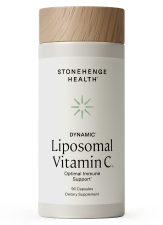
#1 Stonehenge Health Dynamic Liposomal Vitamin C

Stonehenge Health Dynamic Liposomal Vitamin C
A+Overall Grade

#1 Stonehenge Health Dynamic Liposomal Vitamin C

  • OVERALL RATING9.7/10
  • Predicted Effectiveness9.8/10
  • Ingredient Quality9.7/10
  • Value9.5/10
  • Return Policy9.8/10
  • User Rating9.6/10
PROS
  • Liposomal Technology

  • Phosphatidylcholine from Sunflower

  • Potent 1,500 mg daily dose

  • Endorsed by a Doctor

  • Vegetarian Capsules, Non-GMO, Gluten-Free

  • Verified 90-day 100% money-back return policy

CONS
  • Often out of stock due to high demand

Why We Chose It

Stonehenge Health's Dynamic Liposomal Vitamin C is Review Scout's top choice. This formula contains a potent 1,500 mg dose of Vitamin C encased in a high-quality liposomal delivery system.

In reviewing dozens of vitamin C brands, we found that most use the basic water-soluble form of vitamin C, which tends to have absorption challenges. Stonehenge Health also uses phosphatidylcholine sourced from non-GMO sunflower, instead of soy like many other liposomal formulas. We are confident your body will get the maximum benefits from this vitamin C supplement.

Dynamic Liposomal Vitamin C also uses phosphatidylcholine and not bioflavonoids to maximize absorption. We verified that Stonehenge Health’s formula does not contain synthetic fillers or artificial ingredients and does not use the dangerous chemical Hexane.

Stonehenge Health backs its products with a no-questions-asked, 90-day money-back guarantee and is one of the few brands to be endorsed by a board-certified doctor. We also like that they offer customers discounts on bundles. Click on the link below to see their current specials.

*Results are based on user-generated experiences with these products, and individual results may vary. Please refer to the manufacturer’s product website for detailed information.

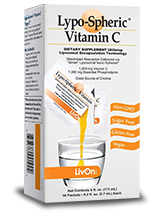
#2 LivOn Laboratories Lypo–Spheric Vitamin C

LivOn Laboratories Lypo–Spheric Vitamin C
A-Overall Grade

#2 LivOn Laboratories Lypo–Spheric Vitamin C

  • OVERALL RATING8.7/10
  • Predicted Effectiveness9.4/10
  • Ingredient Quality9.3/10
  • Value7.0/10
  • Return Policy9.8/10
  • User Rating8.2/10
PROS
  • Liposomal Technology

  • Contains Phosphatidylcholine

  • Potent 2,000 mg daily dose

  • Non-GMO, no Gluten, dairy, sugar, artificial ingredients, or fillers

  • Lifetime return policy

CONS
  • Very expensive

  • Made from Soy Lecithin

  • Not appropriate for those limiting their salt intake

  • Requires to be mixed with water

  • User complaints related to product taste, headaches & digestive discomfort

Why We Chose It

LivOn Laboratories Lypo–Spheric® Vitamin C is a quality liposomal product that uses a patented delivery system. The product contains a daily dose of 1,000 mg of vitamin C and 1,000 mg of phosphatidylcholine. While we were happy to see that LivOn Laboratories uses phosphatidylcholine as its phospholipid source, we were disappointed to see that it is sourced from soy lecithin. The company states that the soy is non-GMO, but it still may not be suitable for those who have soy allergies or trying to eliminate soy from their diets.

The product comes in individual serving packets containing a gel that needs to be squeezed into cold water. The gel does not dissolve, and users have complained it tastes like salty Vaseline. The salt taste likely comes from LivOn’s uses of sodium ascorbate, a form of ascorbic acid. Some feel that sodium ascorbate can reduce the acidity of vitamin C. However, it may not be appropriate for users who are needing to reduce or eliminate salt from their diet. LivOn Laboratories ingredients come in at a close second to the top-ranked brand on our list.

*Results are based on user-generated experiences with these products, and individual results may vary. Please refer to the manufacturer’s product website for detailed information.

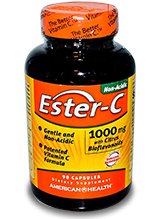
#3 American Health Ester-C ®

American Health Ester-C ®
BOverall Grade

#3 American Health Ester-C ®

  • OVERALL RATING8.2/10
  • Predicted Effectiveness8.5/10
  • Ingredient Quality8.8/10
  • Value8.7/10
  • Return Policy7.5/10
  • User Rating7.6/10
PROS
  • 1,000 mg daily dose

  • Vitamin C as Ester-C®

  • Contains Bioflavonoids

  • Veggie capsules, Non-GMO, and gluten-free

CONS
  • Lower than an optimal amount of vitamin C

  • Contains Gelatin

  • Large capsules are difficult to swallow

  • Quality concerns regarding empty capsules

  • Return policy limited to point of purchase

Why We Chose It

American Health’s vitamin C uses Ester-C® with added citrus bioflavonoids. The daily dose is 1,000 mg, which is a bit lower than our recommended 1,500 mg dose. This formula uses Ester-C® , which is calcium added to ascorbic acid to help to reduce the acidic feeling some users experience when taking basic ascorbic acid. Various manufacturers claim that Ester-C® offers better absorption, but to date, there is no reliable evidence to support this claim. American Health also uses bioflavonoids to claim better absorption. However, as we previously noted, there is a lack of scientific evidence backing marketing claims regarding bioflavonoids and absorption.

Consumers have voiced concerns about receiving bottles with some capsules either unfilled or only partially filled. Additionally, some users have found that the large 1,000 mg capsule is too difficult to swallow. Lastly, American Health does not offer any product guarantee or return policy on their website.

*Results are based on user-generated experiences with these products, and individual results may vary. Please refer to the manufacturer’s product website for detailed information.

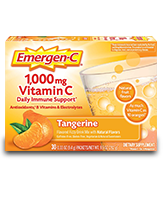
#4 Emergen-C

Emergen-C
C+Overall Grade

#4 Emergen-C

  • OVERALL RATING7.7/10
  • Predicted Effectiveness7.7/10
  • Ingredient Quality7.4/10
  • Value7.8/10
  • Return Policy7.5/10
  • User Rating8.3/10
PROS
  • 1,000 mg dose of Vitamin C

  • Contains Zinc, Vitamin E, and Manganese

  • Non-GMO and Gluten-Free

CONS
  • Lower than an optimal dose of vitamin C

  • Uses standard ascorbic acid

  • Contains maltodextrin and silicon dioxide

  • Contains Sugar

  • Return policy limited to point of purchase

Why We Chose It

Emergen-C is a popular product that combines vitamin C and B with other vitamins and nutrients. Each dose comes in an individual packet of powder that needs to be mixed with water. The vitamin C used in this formula is standard ascorbic acid with a daily dose of 1,000 mg. The dosage is lower than other brands we evaluated, and there is little in this formula to help with absorption. However, Emergen-C does include zinc ascorbate, which some studies have shown can be beneficial for the immune system.30 Unfortunately, those studies used a minimum of 75 mg of zinc, and Emergen-C only has 2 mg. So, you may not want to rely too heavily on the zinc in this formula to offer much immune support. This brand has done a good job marketing its product over the years but found itself having to settle a class-action lawsuit in 2014 because they could not substantiate the claims they made. We found Emergen-C to be similar to Airborne in the fact that they don’t pack a potent and highly bioavailable dose of vitamin C but have elements that are like a low-dose multi-vitamin.

*Results are based on user-generated experiences with these products, and individual results may vary. Please refer to the manufacturer’s product website for detailed information.

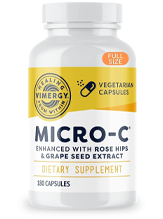
#5 Vimergy Micro-C® Capsules

Vimergy Micro-C® Capsules
C-Overall Grade

#5 Vimergy Micro-C® Capsules

  • OVERALL RATING7.0/10
  • Predicted Effectiveness6.6/10
  • Ingredient Quality7.1/10
  • Value6.9/10
  • Return Policy7.2/10
  • User Rating7.2/10
PROS
  • 500 mg of Vitamin C

  • Paleo, Vegan, Gluten-Free, Non-GMO

CONS
  • Uses all calcium and magnesium ascorbate

  • No Liposome technology

  • Only 30-day return policy

  • Only gives returns for unopened bottles

Why We Chose It

Vimergy Micro-C® Capsules are unique in that they combine Vitamin C with Rutin, Grapeseed Extract, Rose Hips Fruit Powder, and Acerola Fruit Extract.

However, this formula offers the lowest dose of Standard vitamin C of all our picks, 500 mg, and uses the most basic delivery system. We would have preferred to see Liposome technology to increase vitamin C absorption.

The vitamin C in this formula is also from calcium ascorbate and magnesium ascorbate, which the brand touts as low-acidity vitamin C, to create an effective, buffered formula that’s easy on the stomach and digestive tract, but we know from research there is little to support this hypothesis.

Additionally, we found their return policy to be disappointing. Vimergy only offers returns after 30 days for unopened bottles, which doesn’t give the consumer any freedom to try a new product risk-free. We prefer to see a 90-day no-questions-asked return policy, like our top-rated brand offers.

*Results are based on user-generated experiences with these products, and individual results may vary. Please refer to the manufacturer’s product website for detailed information.
Citations
  1. Wallace TC, et al. 2020. “Multivitamin/Mineral Supplement Contribution To Micronutrient Intakes In The United States, 2007-2010. – Pubmed – NCBI “. Ncbi.Nlm.Nih.Gov. https://www.ncbi.nlm.nih.gov/pubmed/24724766.
  2. Helmersson J, et al. 2020. “Low Dietary Intake Of Beta-Carotene, Alpha-Tocopherol And Ascorbic Acid Is Associated With Increased Inflammatory And Oxidative Stress Status In A … – Pubmed – NCBI “. Ncbi.Nlm.Nih.Gov. https://www.ncbi.nlm.nih.gov/pubmed/19079838.
  3. Carr, Anitra, and Silvia Maggini. 2017. “Vitamin C And Immune Function”. Nutrients 9 (11): 1211. doi:10.3390/nu9111211.
  4. Canoy D, et al. 2020. “Plasma Ascorbic Acid Concentrations And Fat Distribution In 19,068 British Men And Women In The European Prospective Investigation Into Cancer And … – Pubmed – NCBI “. Ncbi.Nlm.Nih.Gov. https://www.ncbi.nlm.nih.gov/pubmed/16332652.
  5. Moser, Melissa, and Ock Chun. 2016. “Vitamin C And Heart Health: A Review Based On Findings From Epidemiologic Studies”. International Journal Of Molecular Sciences 17 (8): 1328. doi:10.3390/ijms17081328.
  6. Wintergerst ES, et al. 2020. “Immune-Enhancing Role Of Vitamin C And Zinc And Effect On Clinical Conditions. – Pubmed – NCBI “. Ncbi.Nlm.Nih.Gov. https://www.ncbi.nlm.nih.gov/pubmed/16373990.
  7. Lobo, V, A Patil, A Phatak, and N Chandra. 2010. “Free Radicals, Antioxidants And Functional Foods: Impact On Human Health”. Pharmacognosy Reviews 4 (8): 118. doi:10.4103/0973-7847.70902.
  8. Lien Ai Pham-Huy, Chuong Pham-Huy. 2008. “Free Radicals, Antioxidants In Disease And Health”. International Journal Of Biomedical Science : IJBS 4 (2): 89. https://www.ncbi.nlm.nih.gov/pmc/articles/PMC3614697/.
  9. “Study With Smokers Shows Vitamins Combine For Benefits”. 2020. Sciencedaily. https://www.sciencedaily.com/releases/2006/02/060224104219.htm.
  10. Travica, Nikolaj, Karin Ried, Avni Sali, Andrew Scholey, Irene Hudson, and Andrew Pipingas. 2017. “Vitamin C Status And Cognitive Function: A Systematic Review”. Nutrients 9 (9): 960. doi:10.3390/nu9090960.
  11. Harrison, Fiona E. 2012. “A Critical Review Of Vitamin C For The Prevention Of Age-Related Cognitive Decline And Alzheimer’s Disease”. Journal Of Alzheimer’s Disease 29 (4): 711-726. doi:10.3233/jad-2012-111853.
  12. McRae, Marc P. 2008. “Vitamin C Supplementation Lowers Serum Low-Density Lipoprotein Cholesterol And Triglycerides: A Meta-Analysis Of 13 Randomized Controlled Trials”. Journal Of Chiropractic Medicine 7 (2): 48-58. doi:10.1016/j.jcme.2008.01.002.
  13. “The Roles Of Vitamin C In Skin Health”. 2017. Nutrients 9 (8): 866. doi:10.3390/nu9080866.
  14. Scholfield, C. R. 1981. “Composition Of Soybean Lecithin”. Journal Of The American Oil Chemists’ Society 58 (10): 889-892. doi:10.1007/bf02659652.
  15. 2020. Karger.Com. https://www.karger.com/Article/Abstract/49517.
  16. Russo, A., R. Acquaviva, A. Campisi, V. Sorrenti, C. Di Giacomo, G. Virgata, M.L. Barcellona, and A. Vanella. 2000. Cell Biology And Toxicology 16 (2): 91-98. doi:10.1023/a:1007685909018.
  17. Johnston, Carol S, and Bing Luo. 1994. “Comparison Of The Absorption And Excretion Of Three Commercially Available Sources Of Vitamin C”. Journal Of The American Dietetic Association 94 (7): 779-781. doi:10.1016/0002-8223(94)91950-x.
  18. Amazon Flooded With Millions Of Fake Reviews In 2019 – Reviewmeta Blog “. 2019. Reviewmeta.Com. https://reviewmeta.com/blog/amazon-flooded-with-millions-of-fake-reviews-in-2019/.
  19. Li, Yi, and Herb E. Schellhorn. 2007. “New Developments And Novel Therapeutic Perspectives For Vitamin C”. The Journal Of Nutrition 137 (10): 2171-2184. doi:10.1093/jn/137.10.2171.
  20. “Office Of Dietary Supplements – Vitamin C”. 2020. Ods.Od.Nih.Gov. https://ods.od.nih.gov/factsheets/VitaminC-HealthProfessional/.
  21. “Vitamin C”. 2012. The Nutrition Source. https://www.hsph.harvard.edu/nutritionsource/vitamin-c/.
  22. “Liposomal-Encapsulated Ascorbic Acid: Influence On Vitamin C Bioavailability And Capacity To Protect Against Ischemia–Reperfusion Injury – Janelle L. Davis, Hunter L. Paris, Joseph W. Beals, Scott E. Binns, Gregory R. Giordano, Rebecca L. Scalzo, Melani M. Schweder, Emek Blair, Christopher Bell, 2016”. 2020. Nutrition And Metabolic Insights. https://journals.sagepub.com/doi/full/10.4137/NMI.S39764.
  23. Hon-Wing, Leung, Michael J. Vang, and Richard D. Mavis. 1981. “The Cooperative Interaction Between Vitamin E And Vitamin C In Suppression Of Peroxidation Of Membrane Phospholipids”. Biochimica Et Biophysica Acta (BBA) – Lipids And Lipid Metabolism 664 (2): 266-272. doi:10.1016/0005-2760(81)90049-7.
  24. Cohn, Jeffrey, Alvin Kamili, Elaine Wat, Rosanna W. Chung, and Sally Tandy. 2010. “Dietary Phospholipids And Intestinal Cholesterol Absorption”. Nutrients 2 (2): 116-127. doi:10.3390/nu2020116.
  25. Chung SY, et al. 2020. “Administration Of Phosphatidylcholine Increases Brain Acetylcholine Concentration And Improves Memory In Mice With Dementia. – Pubmed – NCBI “. Ncbi.Nlm.Nih.Gov. https://www.ncbi.nlm.nih.gov/pubmed/7782901.
  26. Tandy, Sally, Rosanna W.S. Chung, Alvin Kamili, Elaine Wat, Jacquelyn M. Weir, Peter J. Meikle, and Jeffrey S. Cohn. 2010. “Hydrogenated Phosphatidylcholine Supplementation Reduces Hepatic Lipid Levels In Mice Fed A High-Fat Diet”. Atherosclerosis 213 (1): 142-147. doi:10.1016/j.atherosclerosis.2010.07.050.
  27. Schneider, Hannah, Annika Braun, Joachim Füllekrug, Wolfgang Stremmel, and Robert Ehehalt. 2010. “Lipid Based Therapy For Ulcerative Colitis—Modulation Of Intestinal Mucus Membrane Phospholipids As A Tool To Influence Inflammation”. International Journal Of Molecular Sciences 11 (10): 4149-4164. doi:10.3390/ijms11104149.
  28. Holló, J., J. Perédi, A. Ruzics, M. Jeránek, and A. Erdélyi. 1993. “Sunflower Lecithin And Possibilities For Utilization”. Journal Of The American Oil Chemists’ Society 70 (10): 997-1001. doi:10.1007/bf02543026.
  29. “Office Of Dietary Supplements – Vitamin C”. 2020. Ods.Od.Nih.Gov. https://ods.od.nih.gov/factsheets/VitaminC-HealthProfessional/.
  30. H, Maares. 2020. “Zinc And Immunity: An Essential Interrelation. – Pubmed – NCBI “. Ncbi.Nlm.Nih.Gov. https://www.ncbi.nlm.nih.gov/pubmed/27021581.