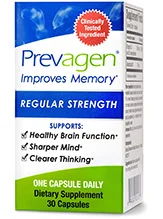
Prevagen by Quincy Biosciences is a product made famous thanks to their massive spending on television advertising. In recent years, the brand has also become infamous for its extensive legal issues related to false claims. This formula, sold in both a capsule and chewable form and a regular and extra strength version, contains apoaequorin, a protein derived from jellyfish. Through their single clinical study, the manufacturer claims that Prevagen helps improve cognitive function and memory by replacing proteins in the brain that are lost during the aging process.
Unfortunately, it appears that not everyone agrees with this theory. In 2017 the Federal Trade Commission (FTC) and the New York Attorney General sued Quincy Biosciences for making false claims. The primary issue asserted by the FTC is that proteins consumed orally, as in a pill or chewable tablet, go straight to the stomach where they get broken down into amino acids. In the form of amino acids, they can’t travel to the brain and then re-convert into a protein to replace any proteins lost due to aging. The story does not make sense from a science perspective. The FTC also charged Prevagen with making false claims stating the company’s own clinical study in actuality showed no statistically significant improvement in memory and cognitive function between those given Prevagen and those given a placebo.
In a non-related matter, the FDA has opened a case stating that Prevagen did not warn its users that seizures and strokes were some of the many adverse side effects of taking Prevagen.
While some users have reported benefits from taking Prevagen, we recommend avoiding the marketing hype and possible side effects. Choose a formula with a variety of vitamins, minerals, and neuro-nutrients such as Phosphatidylserine, Bacopa Monnieri, and Huperzine A, shown in studies over the years to help support memory and cognitive health.